

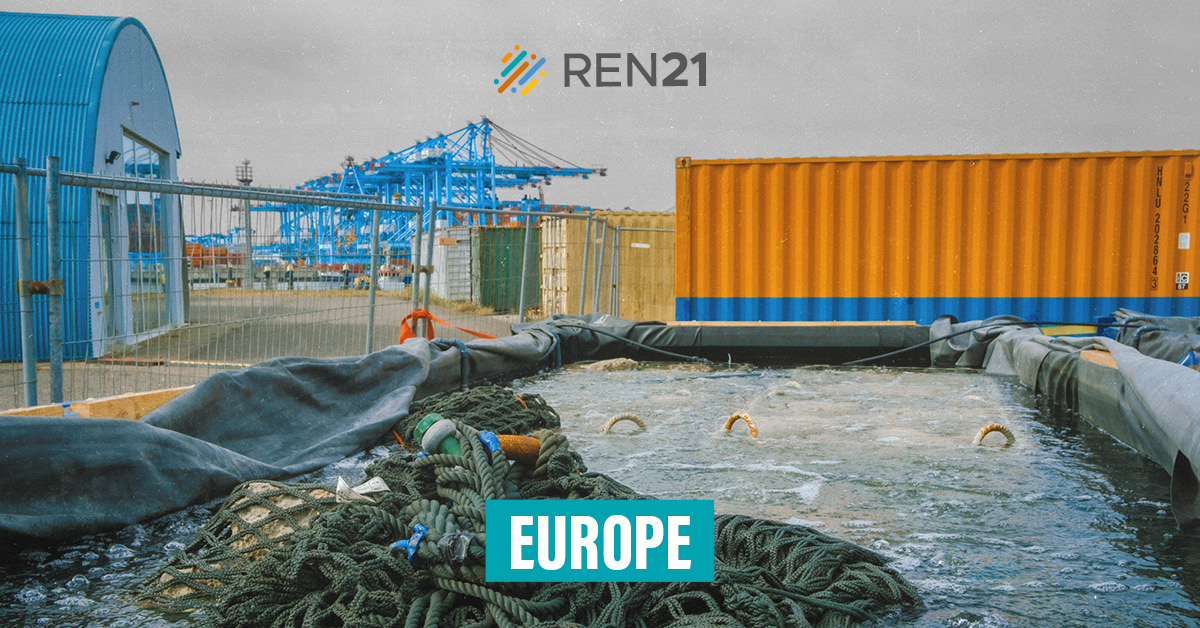
Two centuries ago, the North Sea’s floor was alive with oyster reefs, millions of hectares of them. These reefs formed one of the most productive and biodiverse marine ecosystems in Europe, teeming with life and filtering the waters that lapped against the coasts of the Netherlands, the UK and beyond. Oysters play a vital role in income generation, economic development and even food security.
Today, almost all of them are gone.
But now, there’s hope of bringing life back to these waters at an unprecedented scale, driven by collaboration between conservationists and the offshore wind industry.
“Working with the offshore wind industry, we can actually affect restoration at a scale of the North Sea. And that’s something that hasn’t been done anywhere in the world before. This is really world leading habitat restoration,” says Dr Bose Hancock, a marine restoration specialist with The Nature Conservancy.
Off the coast of Rotterdam, a new offshore wind farm is being built to power hundreds of thousands of homes with renewable energy. Seeing an opportunity, The Nature Conservancy and ARK Rewilding Netherlands are using the turbines’ rocky foundations to restore native oyster reefs at the same time.
Overfishing and dredging in the late 1800s stripped the sea of its oysters, first for food, then for their shells, which were ground into lime to build the very cities that now overlook the coast. In less than a century, 1.75 million hectares of reef habitat vanished. The International Union for Conservation of Nature now classifies North Sea oyster reefs as “collapsed.”
“Endangered or critically endangered is more common for habitats that are obviously under threat. But the oysters in the North Sea are collapsed. There’s none left or the reef,” says Dr Hancock.. “There are a few oysters, but not enough to create habitat.”
Oysters as a Foundation for Food Security and Economic Resilience
Alongside their ecological importance, rewilding oysters can deliver tangible benefits for food security, livelihoods, and economic development across the North Sea region, strengthening the case for integrating restoration into offshore wind projects. Native oysters once supported productive fisheries and coastal economies around the UK, the Netherlands, and northern Europe, providing a reliable source of protein and income for coastal communities. Recent life cycle research highlights the role of oyster systems in sustainable food production and economic development, particularly when restoration is aligned with existing marine infrastructure and circular economy approaches.
Evidence from restoration projects shows that oyster reefs generate high economic value through ecosystem services such as water filtration, shoreline stabilisation, and support for commercially important fish and shellfish species that underpin regional fisheries and jobs. Modelling studies suggest that the loss of oyster reefs can lead to measurable declines in associated fisheries, resulting in ongoing economic losses for coastal communities, while restoration can deliver net positive returns within years rather than decades.
Broader valuations estimate that healthy oyster reef services are worth between 5,500 and 99,000 US dollars per hectare per year, even without accounting for direct harvest, often repaying restoration costs through reduced erosion, improved water quality, and enhanced fish productivity. In a densely used sea like the North Sea, restoring oysters offers a cost effective way to rebuild natural food systems and livelihoods while reducing dependence on expensive engineered solutions for coastal protection and water treatment.
Rebuilding a Lost World
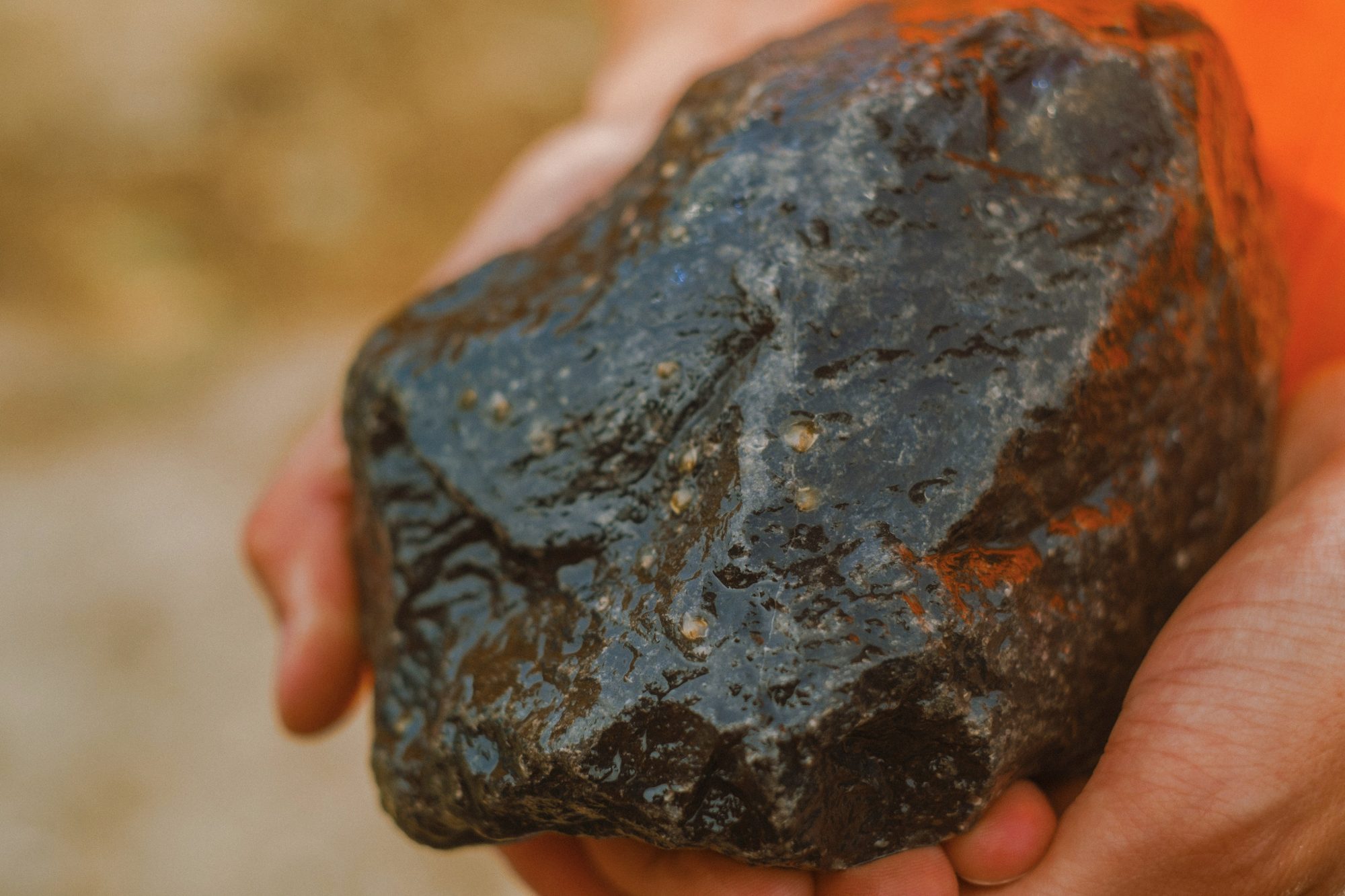
Dr Hancock has spent two decades rebuilding shellfish reefs from Hong Kong to Australia. It’s expensive work. “To put an oyster reef back again,” he says, “we need to build that structure and then add the oysters on the outside of it. Now, how the offshore wind industry and marine habitat restoration come together is that the offshore wind industry is putting an awful lot of rock on the bottom of the North Sea. And that is what I’ve been using all around the world as the base of these oyster reefs.”
Every turbine installed at sea needs a protective layer of rock around its base to prevent erosion. That layer, called scour protection, is almost identical to what reef restoration projects use. “The offshore wind industry is doing the expensive part of the reef restoration for us by putting all that rock there,” says Dr Hancock. “What we’re doing is adding the oysters to that rock before it gets deployed. So the last layer of rock that goes on to that scour protection field has the oysters preloaded.”
That way, Dr Hancock expects that the oysters will grow, start to reproduce and provide the larvae needed to sustain future generations.”
The process works by engineers placing a 30-metre circle of rock around each turbine to protect the seabed. This simple addition enables renewable energy infrastructure to be turned into habitat, creating hundreds of potential reef sites across the North Sea.
Restoring Function and Life
For Dr Francesc Montserrat, a marine ecologist with ARK Rewilding Netherlands, this approach signals a shift in how restoration itself is understood.
“Rewilding is reinstating the original ecosystem functions and services that were there to begin with,” he says. Oysters are fundamental to a healthy marine ecosystem, he explains: “they act as wave breakers so they take energy out of the water and make the surrounding water of the reef much quieter where little animals can hide. The other function is that they filter the water, they take the floating dust and algae and make it clearer. They basically have the same function as coral reefs.”
By dampening wave energy, oyster reefs help reduce coastal erosion and protect infrastructure in a warming, stormier climate. The North Sea may soon prove that climate action and biodiversity recovery can be part of the same story.
Because natural oyster populations are so depleted, there are too few larvae left to recolonise new reefs. To solve this, ARK Rewilding and The Nature Conservancy are working on an initiative called remote setting. This is when oyster larvae are raised in hatcheries, helping them attach to shells or rocks, and then deploying those pre-set oysters on rocks at sea. Each pre-set shell hosted 40 to 50 young oysters. “We proved that it’s actually possible in collaboration with the hatchery to grow these native oysters and transplant them to a remote location.” To scale this up the oyster larvae will be pre-set on rocks put in place by the wind farm company.
The North Sea, one of the most intensively used seas on Earth, could soon become a model for how renewable energy and ecosystem restoration work together – powering homes while rebuilding habitats.
A Novel Alliance
Conservation and renewable energy are often seen as being at odds, turbines versus seabirds, construction versus coral. But Dr Hancock and Dr Montserrat argue that this project shows a different way forward.
“The energy transition is essential to combat climate change,” Dr Hancock says. “Burning fossil fuels is doing an enormous amount of damage through climate change. So the transition to renewable energy is something that we need to pursue as hard as we can.”
Scale is central to this partnership. “It’s not just that we can have renewable energy in the form of offshore wind and a habitat that is important. Together we get both at a much bigger scale than we could otherwise,” says Dr Hancock. The understanding that biodiversity loss runs parallel to the energy crisis has grown, and now the two challenges are being tackled together.
Dr Montserrat agrees. “We have good contacts in the world of these offshore contractors, but also these offshore contracting companies. They’re very interested actually in going above and beyond what they typically do. So they’re tenders, they try to write proposals, propositions that go above and beyond just being the cheapest one that installed this, but actually try to give something back to the system.”
A Sea of Possibility
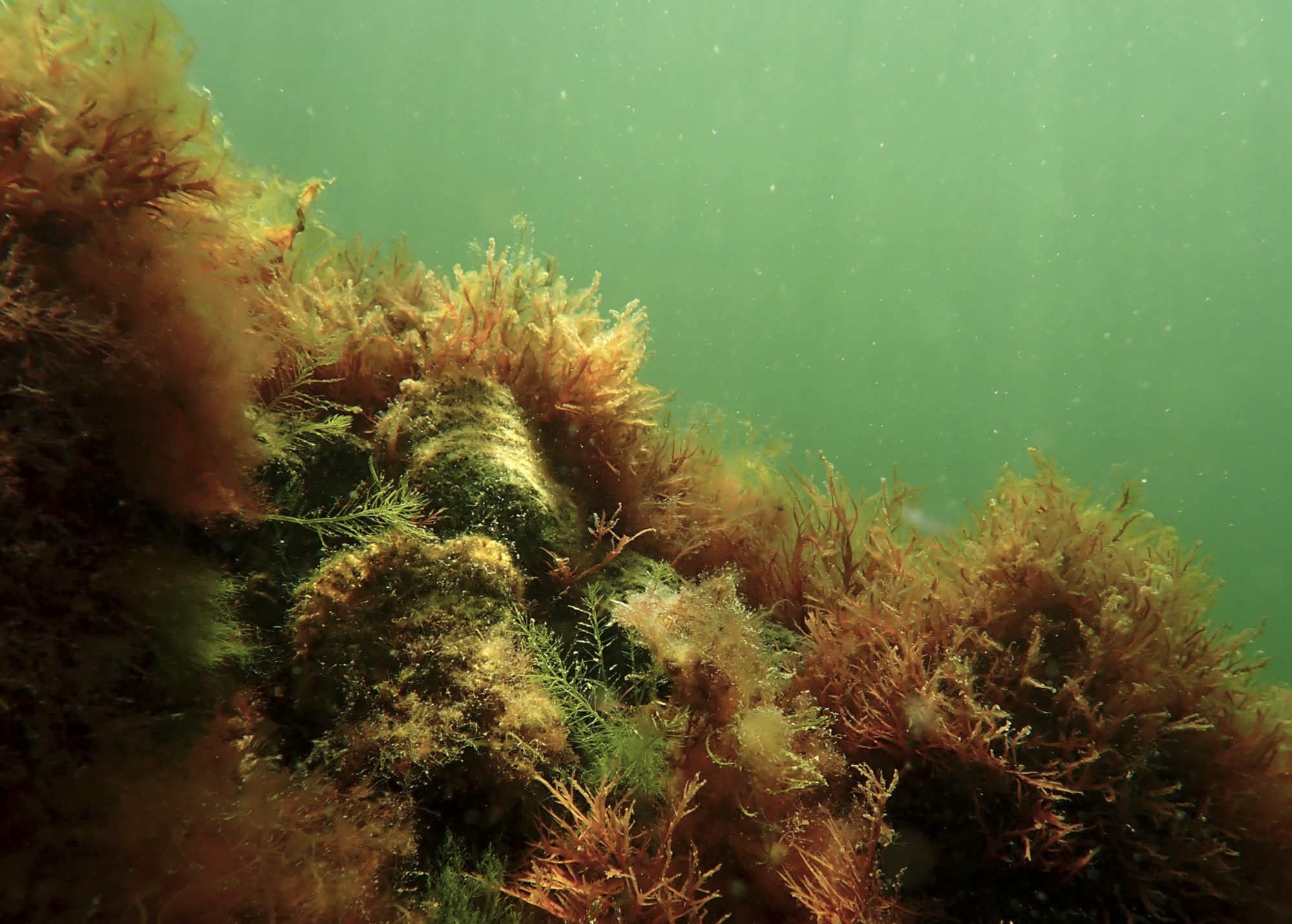
The North Sea has long been a hub of exploitation – fished, dredged and drilled for generations. Now it could become a model of hope for both clean energy and habitat restoration, where human innovation and nature don’t compete but collaborate.
“The tides have changed,” says Dr Hancock, with the wind-power industry and governments “seeing opportunities and positives beyond profit for renewable energy projects.”
“There are elements in there that are not determined by price and that is what’s the social benefit. This is a process of going past mitigation,” he says. “You’re not trying to compensate for damage that’s being done. Not getting a contract if you don’t have a description of how you’re going to leave the place better off than when you started. That’s real incentive.” The EU’s new Nature Restoration Law has added further momentum, setting legally binding targets that conservationists have praised.
Both scientists emphasise that none of this would be possible without cooperation. “The most important part of this story is that we have many people involved. It can’t be done by any one group. It really requires collaboration. So that collaboration is something that needs to be organised, looked after, fostered,” concludes Dr Hancock.
Once a symbol of exploitation, the North Sea is now emerging as a proving ground for a new alliance between people and nature. By pairing renewable energy with ecosystem recovery, it offers a glimpse of a future where progress means not only powering our world, but restoring it too.


